Abstract
Introduction
The international influence of English extends far beyond casual communication. It is firmly embedded in the circulation of scientific knowledge, technological innovation, finance, diplomacy, and transnational employment, and this global position has encouraged educational systems to introduce it earlier and to extend its use beyond the foreign-language classroom. Algeria is part of this broader movement. English has long been taught in lower- and upper-secondary education and at university; it entered the third year of primary school in 2022 and has since acquired renewed institutional visibility in higher education, particularly in debates about English-medium instruction and the internationalisation of research.
This expansion takes place, however, within a historically layered, multilingual, and polyglossic ecology. Modern Standard Arabic is an official language and the principal language of schooling and administration; Tamazight is both national and official; Algerian Arabic remains central to everyday interaction; French continues to occupy important domains in higher education, medicine, technology, business, and cultural production; and English is increasingly associated with science, digital modernity, youth culture, and international mobility. These languages do not merely coexist. They are assigned unequal functions, values, and forms of legitimacy that vary across institutions, regions, generations, and social groups.
The concept of hegemony is useful here only if it is employed with precision. Linguistic hegemony does not mean that one language mechanically eliminates all others. It refers to the process by which the dominance of a language is normalised through institutions, markets, educational expectations, cultural prestige, and the consent of speakers themselves. A hegemonic language is not simply frequent; it is treated as the natural gateway to knowledge, mobility, competence, or modernity. Discourses, attitudes, and representations are therefore central to hegemony because they may transform an historically produced hierarchy into common sense and recast the unequal distribution of linguistic value as a neutral reflection of merit.
The central question is consequently the following: under what conditions might the expansion of English in Algeria reinforce linguistic inequality or contribute to the symbolic and functional marginalisation of national languages, and under what conditions can it instead support an equitable multilingualism? The argument developed here is that English is not intrinsically a threat. The risk emerges when it is promoted through subtractive policies, native-speakerist ideologies, unequal access to resources, or institutional practices that devalue Arabic and Tamazight. Conversely, an additive multilingual policy can widen access to global knowledge while consolidating national and first languages.
The article first sets out its materials and analytical approach, then describes Algeria’s multilingual ecology and the distribution of languages across public space and education. It subsequently clarifies the relationship among hegemony, linguistic capital, native-speakerism, and minorisation, before distinguishing domain expansion from demonstrated language shift. The final sections examine educational inequality, formulate principles for an additive multilingual policy, and discuss the conditions of linguistic justice.
1. Materials and Analytical Approach
This is a qualitative, conceptually driven study rather than a nationally representative survey. It combines three types of material. First, it examines constitutional and educational-policy developments relevant to the status of Arabic, Tamazight, French, and English. Second, it analyses two illustrative photographs of commercial signage from Algiers: an Ooredoo advertisement combining Modern Standard Arabic, Algerian Arabic, French, and English, and a shopfront displaying Arabic, French, and English. Third, it synthesises scholarship on linguistic hegemony, language policy, linguistic landscapes, native-speakerism, multilingual education, and social reproduction.
The two images are treated as theoretically informed vignettes, not as a statistically representative corpus. They are read according to language presence, visual salience, functional distribution, audience design, and the symbolic values indexed by particular choices. Their purpose is to make visible how distinct languages may be assigned complementary communicative tasks within a single public object. They cannot establish national trends by themselves, and no extrapolation is made from two Algiers examples to the whole Algerian territory.
The analytical orientation is grounded in critical sociolinguistics. It asks how language choices become linked to authority, employability, prestige, modernity, identity, and belonging. It also distinguishes processes that are too often conflated: domain expansion, in which a language enters new institutional spaces; minorisation, in which another language is positioned as less legitimate; language shift, involving intergenerational changes in habitual use; attrition, involving reduced individual competence; and language death, which presupposes the cessation of intergenerational transmission within a speech community. The article does not claim to demonstrate attrition or language death. It identifies the ideological, institutional, and distributive conditions that could increase or reduce such risks.
2. Algeria’s Multilingual Ecology
2.1. Official Status, Speech Repertoires, and Historical Layering
Algeria’s linguistic order is the product of precolonial diversity, French colonial domination, post-independence Arabisation, Amazigh cultural and political mobilisation, and contemporary globalisation (Benrabah, 2007, 2014). Modern Standard Arabic occupies the central constitutional and administrative position, while Tamazight is recognised as both a national and an official language (People’s Democratic Republic of Algeria, 2020). Algerian Arabic and the regional varieties of Tamazight remain first languages of everyday interaction for large sections of the population, although their institutional recognition and pedagogical presence do not always correspond to their social vitality. The resulting speech repertoires are therefore not reducible to a list of separate codes: they are historically formed, locally variable, and routinely mobilised in different combinations (Raoud, 2016, pp. 38–48).
French, despite its formal status as a foreign language, retained extensive functions after independence. It has served as a language of scientific and technical higher education, medicine, professional communication, publishing, and sections of the media. Its continued role illustrates the difference between legal status and sociolinguistic function. English, by contrast, has historically occupied a more limited place in everyday communication, especially outside younger educated groups, but it carries strong prospective value because it is associated with global science, digital culture, international study, and future employment.
This ecology is not adequately described as a simple competition between French and English. Such a binary frame sidelines the national languages and obscures internal diversity. A more accurate account considers the respective functions assigned to Modern Standard Arabic, Algerian Arabic, Tamazight, French, and English in schooling, administration, family interaction, cultural production, scientific publication, and economic mobility. It also considers how speakers evaluate these functions and how their evaluations may reproduce, contest, or rearrange hierarchy.
2.2. Linguistic Landscapes and the Public Distribution of Value
Algeria’s linguistic landscape offers an eloquent picture of the country’s multilingualism and polyglossia. Road signs, governmental institutions, private companies, public transport, media interfaces, and advertisements display languages for distinct informational, institutional, and commercial ends. Linguistic-landscape research has shown that the visibility and placement of languages may index both ethnolinguistic vitality and unequal symbolic value (Landry & Bourhis, 1997; Cenoz & Gorter, 2006). In Algeria, Modern Standard Arabic and French frequently coexist in public signage, while Tamazight appears to varying degrees according to region, institution, and policy. English has become increasingly visible in branding, university signage, digital interfaces, advertising, and youth-oriented commerce. Earlier English-indexed branding, such as the label Djezzy Legend (Djezzy being a mobile-network operator), already pointed towards this development. The presence of English is often less informational than indexical: it signals novelty, technological competence, cosmopolitanism, or premium value.
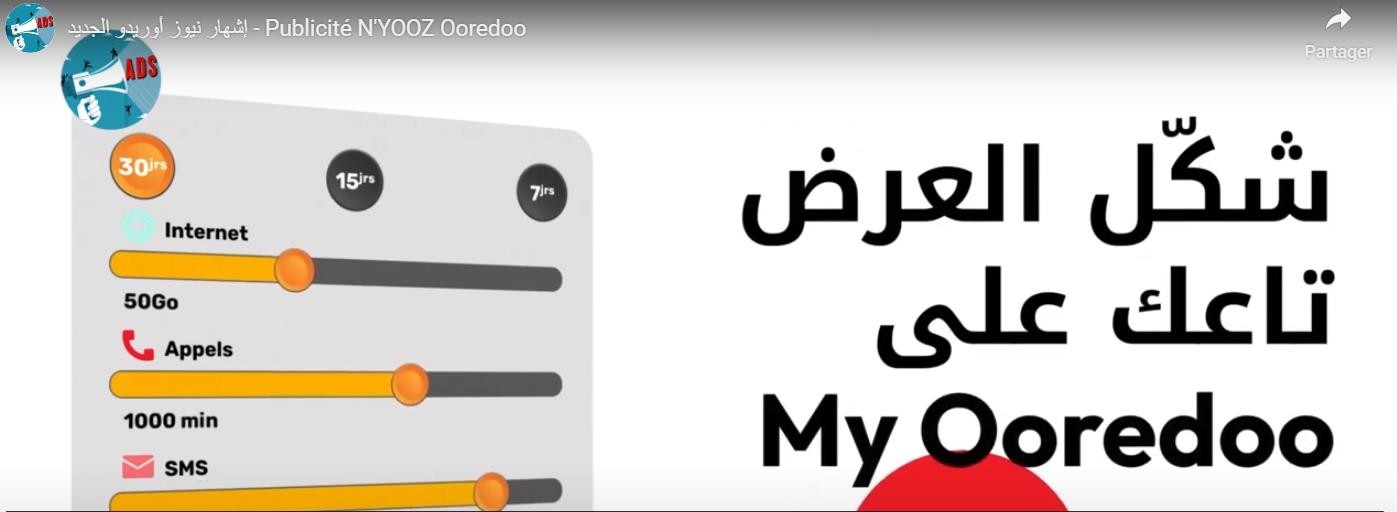
Figure 1. Ooredoo advertisement combining Modern Standard Arabic, Algerian Arabic, English, and French
Source: Ooredoo Algeria website (illustrative screenshot).
Figure 1 distributes communicative labour across several languages. Arabic carries the principal persuasive message; English appears in the brand expression “My Ooredoo”; French contributes familiar commercial vocabulary such as publicité; and Algerian Arabic is embedded in the colloquial register of the slogan. The English element is visually salient but does not replace the other languages. Rather, it gives the advertisement a personalised and digitally modern orientation. The example thus illustrates stylised multilingualism: distinct codes coexist, but they do not perform equivalent symbolic tasks.
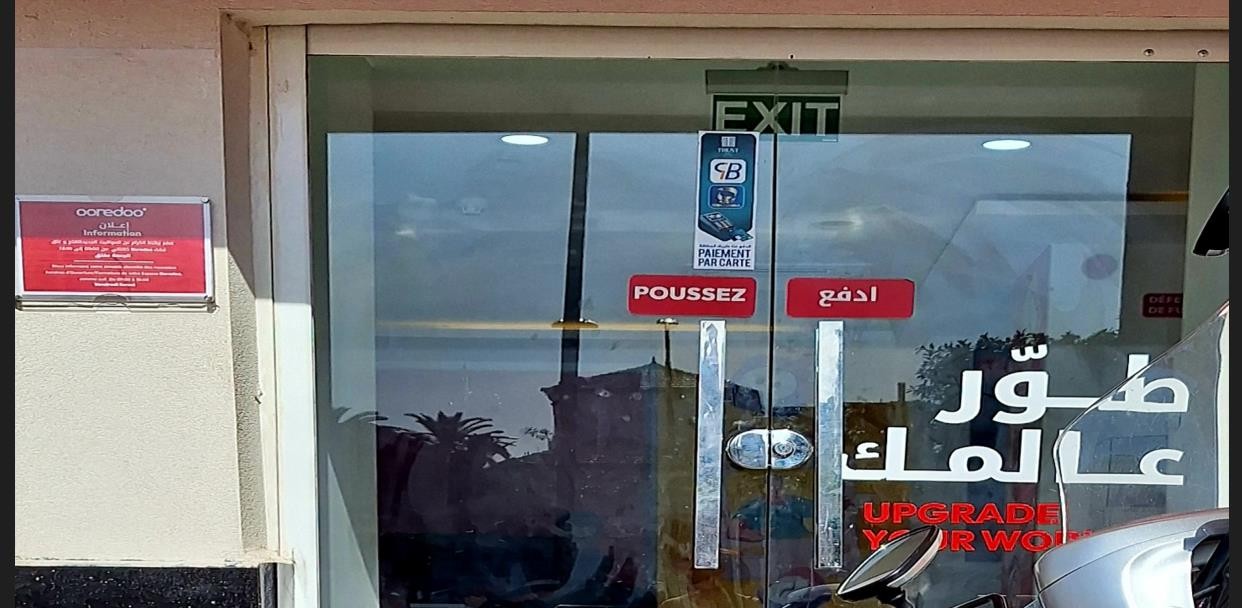
Figure 2. Arabic, French, and English on a shopfront in Algiers
Photograph: Nadjouia Raoud.
Figure 2 similarly combines Arabic, French, and English. The imperative “Upgrade your world” indexes technological aspiration and global consumer culture, whereas Arabic and French perform locally accessible informational functions. The arrangement does not show the disappearance of Arabic or French. It shows a stratified multilingualism in which English is recruited to signify modernity. The analytical question is whether the repeated association of English with innovation may gradually naturalise it as the language of the future while confining national languages to identity, locality, or routine communication.
2.3. Languages in Education
The Algerian education system assigns languages different curricular functions. Modern Standard Arabic is the principal medium of instruction in primary and secondary education and in many humanities and social-science programmes. French is taught as a foreign language but has historically remained important in scientific, technical, and medical higher education. Tamazight is taught in a growing number of contexts, although provision remains uneven across regions and levels. English is taught as a foreign language and, since 2022, from the third year of primary school; it is also expanding in higher education. Alongside these official distributions, Algerian Arabic, Tamazight, and French may be used to explain concepts, manage interaction, and illustrate cases, revealing a classroom repertoire more multilingual than formal descriptions suggest (Benrabah, 2007).
Such parallel practices should not automatically be treated as pedagogical failure. Research on bilingual and multilingual education shows that learners’ full repertoires can support conceptual understanding, metalinguistic awareness, biliteracy, and participation when they are used strategically (García, 2009; Hornberger, 2002; UNESCO, 2003). The key issue is not whether languages mix, but whether the institution recognises and develops learners’ repertoires or treats some of their first languages as illegitimate. Purposeful alternation can serve learning; habitual exclusion can turn linguistic difference into a sign of deficiency.
Early English instruction must therefore be evaluated in relation to the curriculum as a whole. Adding English without reducing overcrowding, preparing teachers, creating age-appropriate materials, and strengthening literacy in Arabic and Tamazight may overburden learners and teachers. By contrast, coordinated multilingual education can facilitate transfer across languages and enlarge, rather than fragment, linguistic competence. The educational question is not the number of languages in the classroom but the quality, sequence, and equity of their provision.
3. Hegemony, Linguistic Capital, and Native-Speakerism
3.1. Hegemony as Normalised Hierarchy
Gramscian hegemony describes domination sustained not only by coercion but also by consent and common sense (Gramsci, 1971). Applied to language, it directs attention to the beliefs through which a dominant language comes to appear inherently superior, neutral, or indispensable. Phillipson’s (1992) account of linguistic imperialism and Pennycook’s (1994) analysis of the cultural politics of English emphasise the institutional and cultural structures that privilege English, while Bourdieu’s (1991) concept of linguistic capital explains why competence in a prestigious language can be converted into educational, professional, and symbolic advantage. Language planning may consequently organise inequality even when it presents itself as technical or meritocratic (Tollefson, 1991; Shohamy, 2006).
These perspectives do not imply that every use of English reproduces imperial domination. English is also appropriated, localised, and used for emancipatory purposes. The critical task is to identify who gains access, which varieties are legitimised, what resources are redirected, and how other languages are represented. Hegemony is strongest when the unequal distribution of linguistic value is perceived as natural and when speakers themselves participate in the devaluation of their own repertoires. In this sense, linguistic hegemony is sustained as much through everyday consent as through explicit policy.
3.2. Native-Speakerism and Epistemic Hierarchy
Native-speakerism is not merely a preference for a particular accent. It is the ideology that associates the ideal teacher, authentic English, and legitimate teaching methods with an imagined native speaker from the English-speaking West. Holliday (2006, p. 385) defines it through the belief that “‘native-speaker’ teachers represent a ‘Western culture’ from which spring the ideals” of English and its pedagogy. This ideological construction produces professional hierarchies and cultural stereotypes. Teachers categorised as non-native may be represented as dependent, traditional, insufficiently communicative, or methodologically deficient, even when they possess stronger pedagogical training and a more precise knowledge of learners’ contexts (Holliday, 2005, 2006; Kubota, 2001).
In Algeria, native-speakerism can have a double effect. Externally, it may devalue local teachers and locally developed varieties of English. Internally, it may encourage teachers and learners to distance themselves from Arabic or Tamazight in order to perform an idealised English-only identity. The English-only classroom can be pedagogically useful when it provides sustained and meaningful exposure. When it becomes a moral test of seriousness, however, it risks turning learners’ first languages into signs of incompetence and making linguistic self-effacement appear to be a condition of professional legitimacy.
A linguistically just pedagogy distinguishes purposeful immersion from ideological exclusion. It enables teachers to maximise meaningful English use while drawing strategically on learners’ other languages for comparison, conceptual clarification, identity affirmation, and critical language awareness. Such a pedagogy neither abandons the objective of high English proficiency nor accepts the fiction that legitimate English belongs exclusively to its historical native speakers.
3.3. Attitudes, Representations, and Discourses of Consent
Language hierarchies are reproduced through everyday discourses, attitudes, and representations. Speakers may describe English as modern, efficient, scientific, or international while characterising their own languages as emotional, local, impractical, or unsuitable for specialised knowledge. These evaluations are not merely individual preferences. Language policy also operates through beliefs and practices that may differ from official declarations (Spolsky, 2004; Shohamy, 2006). Unequal institutional investment in terminology, translation, publication, teacher education, and digital content helps to produce the very evidence later invoked to present some languages as naturally more capable than others.
In informal conversations that first prompted this inquiry, some EFL educators described avoiding Arabic or other national languages because they wished to “prevent becoming familiar with [their] students”. These exchanges were not collected through a formal research protocol and cannot be treated as representative evidence. They are nevertheless analytically suggestive: they show how language choice may become associated with authority, professional distance, and classroom identity. The statement does not prove a general attitude among Algerian teachers; it identifies a question that should be investigated through ethically approved interviews, classroom observation, and a clearly defined sample.
4. From Domain Expansion to Language Shift: Avoiding Conceptual Shortcuts
The expansion of English into education, advertising, science, and digital communication is a process of domain expansion. It may alter the relative value of languages, but it is not equivalent to language shift. Shift occurs when speakers increasingly replace one language with another in habitual interaction, particularly across generations. Attrition refers to changes in individual competence, whereas language death involves the cessation of intergenerational transmission at community level. Rights-based scholarship rightly warns that subtractive education can threaten linguistic diversity (Skutnabb-Kangas, 2000; May, 2012), but these phenomena require longitudinal, demographic, and ethnographic evidence.
It would therefore be scientifically excessive to infer that primary-school English will by itself cause the death of Arabic or Tamazight. Both languages possess substantial demographic, institutional, literary, religious, and cultural resources. The more plausible risk is functional imbalance: English may become disproportionately associated with high-value knowledge and mobility, while national languages are confined to low-prestige domains or identity symbolism. Such imbalance can contribute over time to minorisation, especially where technical terminology, translation infrastructure, and academic publication in national languages remain underdeveloped.
International comparisons must likewise be handled with caution. Research on primary second- and foreign-language programmes in Asia shows that outcomes depend heavily on policy design, teacher preparation, continuity, and material provision rather than on the mere age of introduction (Baldauf et al., 2011). The extensive use of English reported in Finland reflects complex patterns of meaning and attitude, not the simple replacement of Finnish (Leppänen et al., 2011). Evidence from China, India, or Finland is valuable when it reveals mechanisms; it becomes misleading when it is used to predict identical outcomes across distinct sociopolitical settings.
5. English, Schooling, and Social Reproduction
The strongest equity concern surrounding English expansion is not automatic linguistic substitution but unequal access. Bourdieu and Passeron (1977, p. 71) argue that schools may reproduce social hierarchy by treating the cultural resources of privileged groups as neutral indicators of merit. English can function as such a resource when affluent families provide private lessons, digital devices, travel, media exposure, and access to high-quality schools, while other learners depend exclusively on uneven public provision. What appears to be an individual difference in linguistic talent may thus conceal a prior inequality in exposure and support.
If English becomes a gatekeeping requirement for scientific study, scholarships, and employment before universal and effective instruction is secured, existing inequalities may deepen. Learners with stronger French may transfer academic strategies and cognate knowledge more easily into English, while learners whose literacy has not been sufficiently consolidated in any school language may face cumulative disadvantage. A rapid policy shift can therefore stratify educational trajectories even when its stated purpose is democratisation.
An equitable policy requires high-quality public provision, sustained teacher education, diagnostic support, open educational resources, and bridges between languages. It must prevent English from becoming the sole marker of academic excellence and must recognise that language planning can distribute access to knowledge unequally (Tollefson, 1991). Scientific competence should be developed through multilingual resources, and translation should be treated as knowledge infrastructure rather than as a secondary service.
6. Towards an Additive Multilingual Policy
A sustainable policy should reject both monolingual nationalism and uncritical Englishisation. The aim is neither to protect national languages by restricting access to English nor to promote English by weakening Arabic, Tamazight, or French. It is to build a differentiated but non-hierarchical multilingual ecology in which each language can develop high-value functions. Such an ecology requires coherence among declared status, institutional practice, material investment, and speakers’ actual opportunities to use each language.
First, status, corpus, and acquisition planning must be coordinated. Legal recognition has limited effect unless it is connected to terminology development, teacher training, curricular materials, media presence, assessment, and opportunities for sustained use. Because language policy is enacted through practices and beliefs as well as formal texts, implementation must be examined at classroom, institutional, and public levels (Spolsky, 2004; Shohamy, 2006).
Second, literacy in national and first languages must be strengthened rather than treated as an obstacle to additional-language learning. Strong literacy foundations facilitate transfer and protect learners from subtractive schooling (Hornberger, 2002; UNESCO, 2003). For Tamazight, official status should be supported by sustained teacher recruitment, regionally responsive materials, and continuity across educational levels. Equity does not require identical provision everywhere, but it does require that regional variation should not become permanent institutional abandonment.
Third, teacher education must be explicitly multilingual. Teachers need preparation not only in English pedagogy but also in strategic translanguaging, contrastive awareness, assessment, and the politics of language hierarchy. This preparation would allow them to maximise English exposure without humiliating learners for drawing on Arabic, Tamazight, or French. It would also strengthen the professional authority of Algerian teachers rather than measuring them against an abstract native-speaker norm.
Fourth, access to English must be democratised through reliable public provision. Reducing dependence on private tutoring and unequal digital resources is a condition of linguistic justice, not an optional social measure. Open educational resources, school libraries, connectivity, and targeted support should be distributed according to need, especially where rapid reform risks widening the distance between well-resourced and disadvantaged learners.
Fifth, the high-value functions of Arabic and Tamazight must be expanded. Scientific production requires sustained investment in terminology, journals, textbooks, translation, indexing, and digital corpora. Without such infrastructure, the limited presence of national languages in specialised domains may be misread as evidence of intrinsic inadequacy, when it is largely the effect of unequal institutional investment.
Sixth, cultural exchange should be reciprocal rather than unidirectional. English-language education can open Algerian learners to other societies, but it should also equip them to present Algerian histories, languages, and intellectual traditions with precision rather than reduce them to undocumented or folkloric fragments. The objective is not defensive closure; it is an exchange in which global participation does not require the erasure of local epistemic resources.
Seventh, reform must be evaluated empirically. Longitudinal research should monitor learning outcomes, attitudes, classroom practices, regional disparities, and changes in language use. Policy should be revised in response to evidence rather than defended through symbolic opposition between English, French, Arabic, and Tamazight. Such evaluation is indispensable because domain expansion, educational achievement, and intergenerational shift are distinct phenomena.
Finally, critical language awareness should become an explicit educational objective. Teachers should guide learners, through age-appropriate activities, in recognising why certain languages and varieties are valued more highly than others, how access to socially valued linguistic resources is unequally distributed, and how apparently neutral linguistic choices may reproduce social inequalities. Learners should also be encouraged to understand multilingual repertoires as cognitive, cultural, and professional resources rather than as deficiencies. At more advanced levels, these observations may be progressively related to concepts such as linguistic capital, language ideology, and hegemony. Such awareness can foster pride in national identity without reducing identity to a monolingual injunction, while positioning English as an additional resource rather than as a measure of cultural worth.
7. Discussion
The Algerian case illustrates a broader paradox of global English. English can widen access to scientific communication and international networks, yet its benefits are distributed through national institutions that remain socially unequal. The same language may therefore be an instrument of opportunity for some and a mechanism of exclusion for others. The outcome is determined less by the language itself than by the political economy, pedagogical organisation, and symbolic framing of its implementation.
The linguistic-landscape vignettes also complicate a simple displacement narrative. English appears alongside, rather than instead of, Arabic and French. Its role is highly symbolic: it condenses the promise of modernity and global participation. This symbolic premium matters because repeated associations between English and innovation can reshape aspirations and institutional priorities even without replacing everyday language use. A comparable asymmetry may arise in cultural exchange when English-speaking societies are approached through formal academic knowledge while Algerian languages and cultures are presented to others only through partial or folkloric representations. Such asymmetry is not inevitable, but it is one of the discursive forms through which hegemony may be reproduced.
The concept of linguistic justice brings these dimensions together. Justice concerns recognition, participation, and distribution. Recognition requires that Arabic, Tamazight, Algerian Arabic, and local repertoires not be treated as obstacles to intelligence or professionalism. Participation requires that speakers can enter education and public life without linguistic humiliation. Distribution requires that the material benefits of English competence not be monopolised by groups already endowed with educational and economic capital. Linguistic justice is therefore neither the preservation of a static past nor the unrestricted celebration of a global language; it is the institutional organisation of a genuinely additive multilingualism.
This study remains limited by its conceptual design and small visual dataset. It does not measure national attitudes, classroom practices, or intergenerational shift, and the informal teacher observations reported above cannot support statistical generalisation. Its contribution is to clarify mechanisms, correct conceptual shortcuts, and formulate a research agenda. Future studies should combine linguistic-landscape surveys across regions, classroom ethnography, policy analysis, ethically approved interviews with teachers and families, and longitudinal measures of multilingual competence.
Conclusion
The expansion of English in Algeria should not be framed as a choice between global participation and national identity. English is an important resource for science, technology, mobility, and international exchange. The central challenge is to ensure that this resource is distributed equitably and developed without assigning Arabic and Tamazight subordinate intellectual roles. The international power of English need not be purchased at the cost of linguistic self-effacement.
The analysis has identified four connected dynamics: the increasing symbolic value of English; the unequal functional distribution of Algeria’s languages; the persistence of native-speakerist hierarchies through discourses, attitudes, and representations; and the possibility that unequal access to English may reproduce educational inequality. None of these dynamics makes language shift inevitable. They show, rather, why language policy must be coordinated, evidence-based, and explicitly multilingual.
A just policy would make English widely accessible through high-quality public education while expanding the institutional capacities of Arabic and Tamazight. It would treat multilingual repertoires as cognitive and cultural resources, support scientific translation and terminology development, foster reciprocal cultural exchange, and evaluate reform through transparent research. Under these conditions, English can be incorporated into Algeria’s linguistic ecology without becoming either a new instrument of exclusion or a substitute for its national languages.